About Fabric Weaving Reed
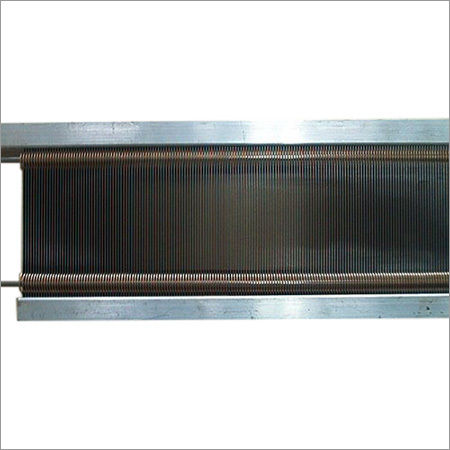
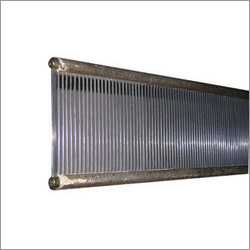
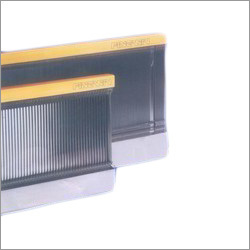
Supported by our enormous industry experience and immense knowledge in the concerned domain, we are active in offering a wide range of Fabric Weaving Reed. Our offered reeds are widely used for weaving of yarn or thread in textile industries. These products can be availed in bulk quantity within given time frame at a reasonable price for our esteemed buyers. Moreover, our offered Fabric Weaving Reed is properly packed in good quality packaging material that ensures its durability for long period of time.
Customizable Precision for Textile WeavingOur weaving reeds are engineered with exact slot widths and dent counts, allowing precise adaptation to warp density and fabric complexity. They support a wide range of DPI options and can be customized in size, material, and length. This flexibility ensures optimal results for plain, twill, and intricate woven textiles across various loom configurations.
Durability and Corrosion ResistanceWith nickel-plated or brass-finished edges and a robust rustproof treatment, our reeds provide outstanding durability and longevity in demanding textile environments. High-grade steel and advanced surface polishing further contribute to their exceptional wear resistance and smooth operation during high-speed weaving.
Universal Compatibility and International StandardsCompliant with international textile machinery standards, our reeds are suitable for automatic, shuttle, rapier, and air jet loom systems. They feature standard mounting designs and a versatile range of dimensions, making them an ideal replacement or upgrade component for manufacturers, exporters, and service providers worldwide.
FAQs of Fabric Weaving Reed:
Q: How are slot widths and dent counts customized to suit different weaving requirements?
A: Slot widths and dent counts in our fabric weaving reeds are precisely manufactured based on the specified warp density or fabric type. Clients can request customized slots, DPI, and overall dimensions tailored to their unique production needs, ensuring optimal separation and shuttle guidance for any textile application.
Q: What advantages does nickel-plated or brass edge material provide for weaving reeds?
A: Nickel-plated and brass edge finishes significantly increase the longevity and wear resistance of the reed, offering corrosion protection, smooth edges, and robust performance. This ensures that the reed maintains dimensional accuracy and withstands regular high-speed weaving operations.
Q: When should I consider replacing my looms weaving reed?
A: Replacement is recommended when the current reed displays signs of wear, corrosion, loss of slot precision, or challenges in guiding the shuttle effectively. Upgrading to our reeds can enhance weaving speed, accuracy, and overall loom performance, especially when switching fabric types or increasing production output.
Q: Where can these weaving reeds be applied in textile manufacturing?
A: Our weaving reeds are suitable for use in a broad array of textile factories employing automatic, shuttle, rapier, and air jet loom machines. Applications include manufacturing of plain, twill, and complex fabrics, with compatibility across diverse loom widths and automation grades.
Q: What is the process for ordering customized weaving reeds?
A: Ordering custom weaving reeds involves specifying desired slot width, DPI, overall dimensions, material preferences, and any other required features. Clients can contact us directly or submit their requirements for consultation, after which the reeds will be manufactured and packed as per request, with a minimum order quantity of one piece.
Q: How does the rustproof treatment benefit the operational lifespan of the reed?
A: The advanced rustproof treatment protects the reed from corrosion and environmental damage, ensuring consistent performance throughout its operational life. This increases reliability for high-speed and continuous weaving operations while reducing maintenance frequency and costs.
Q: What are the key benefits of using your fabric weaving reeds in textile production?
A: Key benefits include precision separation of warp threads, compatibility with various loom types, high tensile strength, low operational noise, and guaranteed dimensional accuracy. Customization in design supports diverse weaving needs, improving both quality and efficiency for manufacturers and suppliers.

 Send Inquiry



 Send Inquiry

 Send Inquiry